Tuesday, 29 November 2016
A Brief History of Horror Films
HISTORY OF HORROR FILMS OVERTIME IN CHRONOLOGICAL ORDER
The Silent Era:
An example of German Expressionism in the 1920's - 1930's. This was initially specifically confined to Germany, but when it got more popular the film production increased from 24 films to 130 films within the first four years (1914 - 1918). Sometime after this Germany became part of the international film industry. However the extreme anti - realism of Expressionism was short lived and nowadays the technique isn't used very often in the film industry. There were two specific genres that inspired and influenced Expressionism were horror films and film noir.
The Concept of Mad Scientists &Monsters:
The horror films which contain characters of being inhuman or have a monster like appearances. Having monsters in films increased their popularity in this particular decade. Such successful monsters in this decade include Dracula, Frankenstein and King Kong. Mad Scientists were introduced to horror films in ways such as The Invisible Man. A Mad Scientist character would be a scientist who has achieved the impossible. Like turning themselves into a monster.
Animalistic Imagery in Horror:
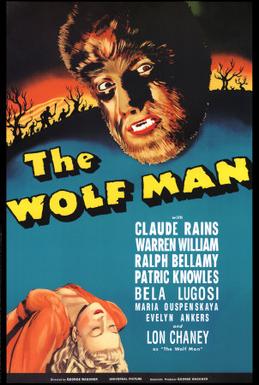
In the 1940's we started to see werewolves and cat people in horror films. The horror genre started to make characters that could turn into animals. The wolf man is a mishmash of several wolf legends, and using werewolves in films was the main attraction and fear factor. There were different characters that werewolves could portray, such as Nazi's (originates from where a human is bit, then they transform). This has links to Hitler trying to take over the world. Cat people came along in 1942 and follows the story of Irena, a young woman who carries with her belief that she is cursed. She ends up turning into a large dangerous cat.
Mutants & More Monsters:
Existing life forms made into monsters are done by using blue screen techniques. The monsters represented movie technology of that time which drew the audience in. The mutants and the ideas of monsters for this era comes from the fear generated by the Atom Bomb / Atomic Bomb. Monsters offered a vision of destruction created by humans and non - humans. For example The Blob, which was released in 1958, was to warn people of space travel. The Blob feeds and expands on an individuals fears. Technology did scare a lot of people in the 1950's as part of the unknown. Horror films used this and created aliens and Sci-fi Horror. Also Body Snatchers was a popular film in the 1950's as the aliens taking over there human bodies symbolises communism.
Ghosts and Satanism in the 60's and 70's:
1970's horror films reflected on the grim outlook of the decade, this was also when big budget and respected horror films returned. The Exorcist was of this era which was about a little girl possessed by a demon, this film was voted 'the scariest film of all time'. Theses films revolve around the children being unwanted and doing sadistic things to their parents or family. The most popular horror of this time was ghost stories which was seen as a reaction to the elaborate creatures in the late 1950's.
Slasher Movies and Body Horror:
In the 1980's the blood and gore horror movies were born from the minds of fans and directors. The improvements in animatronics, liquid foam and latex meant that the human frame could be changed in realistic close ups. The special effects in the 1980's were good enough to show gruesome action up close, as well as more violence and monsters. Furthermore, the monsters of the 80's were of supernatural origins like ghosts, Freddy and Jason. And human origins were also seen such as Vampires, Werewolves and Zombies. Also there were unknown origins like aliens and Sci-fi. These films in the 1980's were made with a lot of gore and blood as the filmmakers were able to do it due to the advances in gore makeup and film technology. As a result of this the horror films of the 80's were less scary than ones released in previous decades. During the 1980's the audiences became interested in the human body and horror films were released in the 80's were mainly focused on mutilation and modification to the human body. The meaning of a Slasher film was a tight set of conventions which mainly include a psychopathic killer that stalks teenagers with a sharp weapon such as a machete. A lot of Slasher films in the 80's were popular and resulted in multiple sequels and remakes were made.
Monday, 28 November 2016
A horror film is a film genre that pursues to portray a negative emotional reaction towards the viewers. Horror films tend to focus upon the viewers fears, nightmares and terrors. Films that contain horror scenes are unique due to the fact that, there is a recognisable pattern that happens over and over again. The main aim of horror films is to explore the viewers fears and to explore how they react furthermore, it also captures their imaginations.In addition, in the 1970's and 1980's there was a lot of vampire horror films due to the fact that, many people feared blood diseases such as HIV. The sub-genre of the film is slasher horror which typically involves a psychopathic killer wearing a mask to cover their identity. Also, these type of films tend to contain graphic images and a series of murders. In the 1980's slasher films were very popular as result of this multiple sequels and remakes were made of the film. All of the special effects within slasher films were good therefore, they portrayed gruesome and more violent actions. Furthermore, during the 1980's these films of blood and gore type of genres were also popular however, they were produced by the directors and fans.
Some examples of horror films:
The Wolf Man - This film was produced during the War in the 1940's. The film production was very big around Europe. Furthermore, this film consists wolves due to the fact that, they play a huge part to portray horror during wartime. Using werewolves in the film was the main fear factor during that time. The werewolves could be seen as Nazi's due to the fact that, humans are bit therefore, they will transform, this is a classic. In addition, this shows that it could link in with Hitler as he tries to take over the world.
The Silent Era - It is an example of a German expressionism produced during the 1920's and 1930's. Furthermore, the expressionism didn't go anywhere else expect for Germany. Within the first four years of the film, (1914 - 1918) the film production became a lot more popular therefore, it raised from 24 films to 130 within a short period of time. Although the film production was raised which was beneficial, Germany later became a part of the international film industry. This is beneficial due to the fact that, they can produce more films therefore, if they are successful they can gain more money. The two specific genres that influenced the expressionism and contributed towards the film are, horror films and film noir.
Mutants & Monsters - These type of films normally contain existing life forms that are created and made into monsters by using blue screen techniques. An example of a mutant and monster film would be The Blob, which was released during 1958 to reflect to the audience about space travel. Furthermore, this film expands on individual fears and tries to capture their reactions as it build up tension. The monsters are an idea in order to present the fear typically generated from the atom bomb. Another example of this type of genre would be the Body Snatchers film as it was very popular within the 1950's. Due to the fact that, it contains aliens that take over many human bodies.
The Exorcist - Another good example of the history of horror due to the fact that, it was created during the 1970's and the genre is horror. It is beneficial that the film was created and produced during 1970 because there was bigger budgets and more respected horror films. In addition, as it is a horror film it clearly portrays the grim outline within that era. The film shows the story of a little girl which becomes possessed from a demon. The film typically looks upon the aspect of children being unwanted and doing bad things towards their parents. The Exorcist was voted the scariest film of all time.
Hammer Film Productions - This was found during 1934, and they created films such as, Dracula (1958) and The Mummy (1959). The Hammer Film Production is a British film production company based within London. The production company is mainly known for Gothic, hammer horror genres and films during the mid 1950's to 1970's. These types of films within this production mainly focused on victims however, it didn't contain crimes nor did it include creatures etc. These films were beneficial as they were filmed in colour so it is more eye catching for the audience.
Tuesday, 15 November 2016
Individual Movie Plan
What is a suspense thriller and iconography associated with it?A suspense thriller is a sub genre characterized and defined by the moods they elicit, giving viewers heightened feelings of suspense, excitement, surprise, anticipation and anxiety. This may be achieved by using quick cuts for tension, in particular to hide the identity of the protagonist at the start, creating mystery, and extreme close ups. Thrillers contain a protagonist and an antagonist, presented through a disruption in equilibrium. Successful examples of thrillers within the genre I'm researching, much similar to my film idea are 'The Hitchhiker' or 'Cabin fever'. Iconography simply means symbolic representations, which often has a conventional meaning attached to an image or object. Iconography is very important as it is part of the mise-en-scene and therefore helps to construct atmosphere for the audience. Lighting is key within mise-en-scene for thrillers. Dark, green screen, grey colours are associated with this sub genre, and often shadows are used to represent the unknown within darkness and the feeling of a stranger being present. Shadows build up fear, and shows how the protagonist is usually oblivious. Small sources of light may be used, such as street lamps which focus on the protagonist and how they are surrounded by darkness, creating a tense atmosphere with low key lighting.
Plot
The genre of my movie will be a thriller, sub-genre: suspense thriller. The name of my film is 'Lost in the woods'. To make it suspense, I will add loud sounds and sudden movements which will get the audience’s heart racing, adrenaline pumping, and emotions at peak.
Within the first few minutes of the film, the viewers will experience emotions felt when loosing family members and feeling isolated, surrounded by no other standing family, just strangers. The movie will begin with a flashback as the man (Adam) looks down at his mother in hospital, after she’s died, reverting back to all the great memories they shared. This will make the audience aware of how close their relationship was and put them in Adams shoes so they emphasize with him. His emotion will be foreshown through his actions, of metaphorically ‘packing up’ the past, and standing on his own two feet and moving away from what he’s used to seeing. In this case, Adam moves to far Australia, where he starts a new life. Within the first few minutes we will see him packing up and leaving behind his old life. This will engage the audience as they will be eager to know where Adam is going and being a thriller, who’s going to confront him or what particularly?
As the film goes on, Adam gets on a flight ,full of down emotions, hoping Australia will offer an alternative to his’ lost, lonely’ house back in the UK. Once in Australia, he takes a rundown shack-like house off a young man for a cheap price, in hope to refurbish it after settling down. The house is surrounded by forest, in Queensland and is physically in the rainforest, deserted, with no other buildings around. Adam takes on the house, as he’s in a position to take anything without being picky. He soon is eager to get to know the surrounding areas and goes for a wander into what he doesn’t know is a deep forest. Loosing track of time, Adam wanders deeper and deeper as he has wandering thoughts of his mother and his life back in the UK. Darkness falls over the sky, as Adam wanders into the unknown. Soon to realize, he’s lost. Paranoia kicks in, as he realizes where he is and the risks of this, he keeps looking left, right, behind himself, in front. Once hitting nightfall, he crosses paths with a hitchhiker, which frightens him yet gives him false hope of will he know the way back to his home. Once approaching the hitchhiker, although he’s friendly (fake) connotations tell us he’s a psychopathic, by the way he dresses, his expressions and body language. The hitchhiker is a complete stranger, which Adam has faith in to guide him home, in woodland at 3am. The audiences know this guy isn’t right but does Adam? The hitchhiker turns out to be a serial killer, which Adam realizes when he invites him into his shack, out of kindness, for a drink. When the man goes outside for a cigarette, Adam checks the hitchhikers bag to reassure himself that he isn’t some strange stalker or worse, as he raids his bag, to find many weapons and images of past victims of kill, the hiker happens to come back in, carrying a large carving knife.
Adam apologizes in hope the man will forgive
him, however things deteriorate as the man pretends to forgive him, then
disappears. Soon to return, torturing Adam till death. This will include many
scenes of chasing throughout the forest.
Evaluation
Evaluation
My film will target audiences who appeal
towards thriller/scary movies and emotional serious drama films, as the
beginning starts on a down scale. The effects and camera angles such as the
chase scenes, camera angles will point up towards the hitchhiker to present him
as a more powerful character, and camera angles will point downwards to the man
being hunted to make him look vulnerable and weak. The camera will have certain
filters over such as a green, grey filter which thriller/horrors usually have,
with a misty background to portray how you never know what’s hiding in the
shadows. I will use close up shots to show the fear during integration of the
vulnerable man, and how careless and sharp the hitchhikers features seem. I will include jumping loud noises to grasp
the audience’s attention and get them on the edge of their seat, much like a
thriller should. A few long shots will be used as Adams mum dies, to show how
his surroundings are busy yet he’s isolated and alone whilst everyone else has
each over to fall on. Shots will be delivered in a quick pace of 2 per second,
to show the tension build-up of the next occurrences.
What is psychological horror?
Psychological horror is a subgenre of horror, which can be portrayed within literature andn games etc.Furthermore, it focuses upon the protagonists mind and their fears in order to frighten the viewers and audience.
Homework for Media:
Title: Silence of the Soul
Psychological horror is a subgenre of horror, which can be portrayed within literature andn games etc.Furthermore, it focuses upon the protagonists mind and their fears in order to frighten the viewers and audience.
Homework for Media:
A film based upon mental illness (PTSD – Post Traumatic
Stress Syndrome) to portray how the sufferer will often stay silent. I believe
this will be good to film due to the fact that it captures the audience, and it
can include many different shots to capture different locations, scenes, and
feelings that the protagonist will depict. I thought the film could focus upon
the aspect of looking towards the life of a women from an early childhood life,
to her elderly life. In some places it could include some pieces of short
dialogue in order to show her different emotions therefore, it will be snappy. In
addition, could look towards adding silent images to suggest a sense of
excitement and engage the audience. Throughout the film, they’ll be different
emotions explored in order to show what issues she follows, the problems within
her illness and what makes her happy therefore, could suggest connotations
towards romance and thriller. In the first two minutes of the film, it could be
set out as an interview to explore and state how she got the illness for
example, a car crash, birth or something mysterious you may find out later
during the film. During the middle of the film, she begins to have flashbacks
to her early life therefore, this destroys her life now and makes her worse
than what she actually is. Furthermore, she could begin with suicide thoughts
so, it is emotionally touching and it creates tension towards the audience as
it makes us wonder what she will do further in her life. Then near to the
ending of the film, it could either be a cliff hanger to make the audience want
to know more, and read on or on the other hand, she eventually gets better as
something happens to her through a mystery. So, the audience begins to
emphasise with the characters more and makes them feel pain. Also, it will be
classified as a happy ending. The genre of the film tends to fall towards being
a mixture of psychological thriller then, there may be some connotations of romance portrayed within. The film is targeted mainly towards people interested
in mental and physical emotions, love and fantasy. I shall include many
different camera shots for example, off shoulder shot (medium – long), long
shot from inside the room, close up shots and many more to show a variety of
different skills and effects.


Individual Film Idea
Individual Film Idea:
GENRE: Horror
(ROUGH DRAFT)
PLOT: A small group of teenage girls are on their way to a Halloween party, they are driving / are being driven down a country road as a shortcut to avoid the heavy traffic of the city. Also because it is a quicker way than the city route. Within the first minute a clown appears at the side of the road with a baseball bat in hand. The clown is dressed in a plumbers boiler suit, with a clown mask on its face. The car slows down and the teenagers are anxious, frightened and questioning why the clown has appeared at the side of the road. The ominous light from the headlights gives the clown the chiaroscuro lighting required to portray connotations of the horror genre.
The teenagers, upon seeing the clown scramble out of the car screaming, going off in different directions. completely separating themselves from each other in their panic. The teens are beyond terrified. They all run into different sections of the forest at the side of the road when the clown comes closer to the vehicle swinging the bat. And eventually comes after them one by one into the woods.
The rest of the opening will document the group together (and possibly as individuals and their POV's) and their turmoil regarding their situation and their journey and how they may get out of it. The entirety of the short opening will be documented through a variety of long shots, medium shots, close up shots, tracking shots, establishing shots, jump cuts as well as possibly some POV shots.
TITLE: Twisted
Monday, 14 November 2016
Media Homework – Continuity
What is
continuity in film?
Continuity in film is when actor during a film does something
for example, either standing or sitting down therefore, you can edit two shots
together to make it look more realistic and accurate. An example of a shot that
could be used for this is a medium long shot. Continuity typically means it is
a transition between one shot to another however, it makes it flow more
smoothly as it does not automatically jump from one scene to another so quickly
therefore, this keeps the audience more engaged. Also, it shows the shots go
together more naturally.
Some types of continuity include:
·
Blooper Continuity (meaning it is physical) portrays
that the audience soon notice when objects are missing or being changed within
a shot. For example, if the actor is wearing different clothes or different
crops.
·
Technical continuity shows unexpected changes within a
shot which are also known as, jumps cuts. Furthermore, this typically reflects
it is cutting out boring things within scenes such as, driving for a long time.
180* line
of action Rule
The 180* line of action rule is a guideline when filming.
Within a scene or conversation, the actors must have the same either left or
right relationship to each other but, only at a 180* (degree) angle. However,
the camera can be changed just for close ups, etc. Although, you cannot film
the other side because the set will change and the actors flip sides so that
the audience engage into the film more. Also, this rule allows the audience to
have a greater sense of location.
Shot –
Reverse Shot
This is an editing technique using during a face to face
conversation, for example. It reflects the different type of shots that are
explored and used such as, off shoulder shot focusing upon one person then
flipping on to the other person, to get a close up therefore, it is alternate
between each actor whilst they speak.
Match on action/Match cut
Match on action or cutting
on action is a film or video editing technique used for continuity editing, in
which one shot automatically cuts to another shot reflecting the action in
between therefore, it engages the reader more. Cutting on action gives a sense
of continuous time when watching the edited film. By using movements such as
the actors walking, you can hide things from the audience, mainly objects and
other little things that are not valid as much. So, the brain automatically
adapts to following the people as there is nothing else exciting around the
actors. This further engages the viewers as it may consist of different
locations, characters and actors. An example of movement would be using a long
shot to show the actors are walking up to a chair then, sitting down. After
that, the shot will be changed to a close up of the actor as they sit down
therefore, it is unnoticeable due to the fact that, all attention from the
audience is payed towards the movement and not the cut, as it catches the
viewers eye.
Sunday, 13 November 2016
Continuity Definition, 180 Rule, Shot Reverse Shot.
Continuity in Film
180 Rule / Line of Action
When filming a current conversation, it is of the upmost importance that you focus on only filming on the 180 degree line. One side of the shoulders of the two people in conversation. The 180 degree rule is a guideline put in place to ensure the conversation runs smoothly. however you can change the angle by changing the shot type. Like a facial close up of a character in the conversation. Moreover, filming over the 180 line can also break the continuity of the shot as the whole location / set may be different on the 'other side'. This means the audience will notice the changes and the transition will not be smooth. As the side they are familiar with has been flipped to one in which they are not familiar with. There is a fear of disengaging the audience when the 180 rule isn't done correctly.
In film, the process of continuity is cutting together two shots to make them effortless and go together smoothly. There are different ways of portraying this, for example if a person sits down on a chair, two separate shots can be put together to make the transition run smoothly. This is done, for example, when a long shot or wide shot of the actor / actress is moving towards the chair and they sit down. Next the same action would be repeated exactly but in the frame of a medium shot, perhaps at a different angle. So then the editors can use the long shot first, then the medium shot as the actor goes to sit down. If this is executed right then the transition should be effortless and the audience should not notice the change in shot. However if executed wrongly there will be some possible glitches such as the actor / actress going to sit down twice; once in the long shot and straight after in the medium shot. This would mean the movement would not portray how it would in real life and the audience would certainly notice the transition. Although, when the transition goes smoothly, the audience will not notice the change of angle or shot as the continuity will not be broken. As well as keeping the shots smooth, the actors / actresses mannerism's must be exactly the same as they were before. Otherwise continuity is broken. The same rule applies for any props that are visible in either shot, they must remain in place otherwise continuity will be broken.
When filming a current conversation, it is of the upmost importance that you focus on only filming on the 180 degree line. One side of the shoulders of the two people in conversation. The 180 degree rule is a guideline put in place to ensure the conversation runs smoothly. however you can change the angle by changing the shot type. Like a facial close up of a character in the conversation. Moreover, filming over the 180 line can also break the continuity of the shot as the whole location / set may be different on the 'other side'. This means the audience will notice the changes and the transition will not be smooth. As the side they are familiar with has been flipped to one in which they are not familiar with. There is a fear of disengaging the audience when the 180 rule isn't done correctly.
Example of 'Shot Reverse Shot'
Wednesday, 9 November 2016
Continuity Defintion
Continuity In Film
Continuity in film is the process of a technique such as cutting two shots, smoothly. This can be portrayed through an action an actor performs, for example sitting down, the editor can compose two shots next to each over, such as a long shot as the person is walking towards the chair and a medium shot sitting down. The editor positions the shots to look as though they flow and happen together, when they are actually two separate shots, repeated twice from different camera angles. Continuity happens as the shot transitions from one to another, without jumping/abrupt changes for the eye to catch out, therefore the movement appears as it would in reality, when the camera is actually switching across several angles. Continuity can only be successful if the same physical factors are kept, otherwise continuity is broken. For example objects which appear within the background must be kept there, otherwise it may catch the audiences attention, which applies the same for the clothing worn within the shot, for example if shots are taken at different periods of time, things must be kept the same as the last shot taken.
180 line of action
During filming a maintained conversation, you must focus on filming ONLY on the 180 degree line, meaning one side of the shoulders, for example of two people. The rule is a guideline put in place to ensure cast have a left to right relationship frontlines when being filmed. However, you can change the angle by changing the shot type for example, to a close up of the facial expressions of certain cast. Filming the other side can also break continuity, as the set is different on the other side, therefore changes the image the audience are seeing, flipping the side they are familiar with. Flipping the set, disengages the audience and makes them miss the plot of the film or certain parts to it, as they need to feel a continuous sense of direction and location.
Example of 180 degree line of action

Shot reverse shot
During a conversation being filmed, the changing shots from a shot of one person to another, or a shot of one object to another is called shot reverse shot. This is a continuity editing technique, which presents what the cast is supposedly looking at or the person they are talking to. This is alternated as they speak, or look at one another, from reverting to the person and a reverse angle shot back to another person. This technique ties in with the 180 degree rule, and retains continuity as it doesn't disorientate the audiences perspective on the sense of location and characters. The shot reverse shot routine has to have eye line match otherwise the audience perspective of location and who the character is talking to distorts.
Example of shot reverse shot

Match on action/match cut
This is an editing technique used to cut one shot to another, portraying some sort of action. This technique hides cuts, as the brain follows movement automatically, therefore by using movement to hide a cut, the audiences attention is grasped on the moving object/person rather than the slight jump/edit. For example, using a long shot as a person walks over towards a café and reverting the shot to a close up as they enter the door, it goes unnoticed as attention is paid to the movement, not the cut. This is draws the viewers attention away from continuity issues. This technique creates a continuous sense of action rather than placing a shot next to another shot.
Example of match on action
Continuity in film is the process of a technique such as cutting two shots, smoothly. This can be portrayed through an action an actor performs, for example sitting down, the editor can compose two shots next to each over, such as a long shot as the person is walking towards the chair and a medium shot sitting down. The editor positions the shots to look as though they flow and happen together, when they are actually two separate shots, repeated twice from different camera angles. Continuity happens as the shot transitions from one to another, without jumping/abrupt changes for the eye to catch out, therefore the movement appears as it would in reality, when the camera is actually switching across several angles. Continuity can only be successful if the same physical factors are kept, otherwise continuity is broken. For example objects which appear within the background must be kept there, otherwise it may catch the audiences attention, which applies the same for the clothing worn within the shot, for example if shots are taken at different periods of time, things must be kept the same as the last shot taken.
180 line of action
During filming a maintained conversation, you must focus on filming ONLY on the 180 degree line, meaning one side of the shoulders, for example of two people. The rule is a guideline put in place to ensure cast have a left to right relationship frontlines when being filmed. However, you can change the angle by changing the shot type for example, to a close up of the facial expressions of certain cast. Filming the other side can also break continuity, as the set is different on the other side, therefore changes the image the audience are seeing, flipping the side they are familiar with. Flipping the set, disengages the audience and makes them miss the plot of the film or certain parts to it, as they need to feel a continuous sense of direction and location.
Example of 180 degree line of action

Shot reverse shot
During a conversation being filmed, the changing shots from a shot of one person to another, or a shot of one object to another is called shot reverse shot. This is a continuity editing technique, which presents what the cast is supposedly looking at or the person they are talking to. This is alternated as they speak, or look at one another, from reverting to the person and a reverse angle shot back to another person. This technique ties in with the 180 degree rule, and retains continuity as it doesn't disorientate the audiences perspective on the sense of location and characters. The shot reverse shot routine has to have eye line match otherwise the audience perspective of location and who the character is talking to distorts.
Example of shot reverse shot

Match on action/match cut
This is an editing technique used to cut one shot to another, portraying some sort of action. This technique hides cuts, as the brain follows movement automatically, therefore by using movement to hide a cut, the audiences attention is grasped on the moving object/person rather than the slight jump/edit. For example, using a long shot as a person walks over towards a café and reverting the shot to a close up as they enter the door, it goes unnoticed as attention is paid to the movement, not the cut. This is draws the viewers attention away from continuity issues. This technique creates a continuous sense of action rather than placing a shot next to another shot.
Example of match on action
Tuesday, 8 November 2016
Subscribe to:
Posts (Atom)